

 Amy Hunt
So, you’ve recently swapped the 2 hour long commute for a short stroll to the kettle and with the government recently announcing new guidelines on working from home, getting that workspace in shape has never been more of a priority. Setting up camp at the dining table is no longer it. Though, it would seem a huge shame if your home office still looked like somewhere you’d be asked to wear a lanyard.
According to a recent study, office works spend an average of 5 hours and 41 minutes each day sat at a desk across an average working week. That’s a lot of time to not really like the space you’re sitting in. It’s important to remember that a home workspace can be comfortable, practical and full of personality. There’s room for colour, furniture you actually like and of course a door that works with the rest of your home but gives your home office some practical detailing. Even if your “office” currently shares a room with the spare bed and a heroic amount of washing, you CAN make it work.
These home office ideas will help you create somewhere you can get things done, then happily switch off and ignore when 5pm rolls around. Lets start with the way you use the space and build the look around it…
Give Your Desk a Proper Place to Live
Before choosing paint, think about an ordinary working day. Do you need two monitors? Somewhere to spread out paperwork? A quiet spot for calls? Your answers matter more than whether a particular desk looks lovely in a tiny Instagram alcove.
Try the proposed position with a chair before buying anything. Check you can sit comfortably, move back from the desk and open nearby drawers. Allow for the room door’s swing, too. A chair that gets nudged every time someone walks in will lose its charm quite quickly.
In a shared room, position the desk so someone can move through without walking directly behind you on every call. That small layout decision can be way more useful than another storage basket.
How do you create a home office in a small space?
Choose a desk that fits your equipment and leaves room for your legs and chair, then use wall shelves or a nearby cupboard for storage. An alcove or unused corner can work well. Measure the usable space, including the area needed to pull out your chair, the smallest desk isn’t always the most practical.
Choose Furniture You’d be Happy to Have at Home
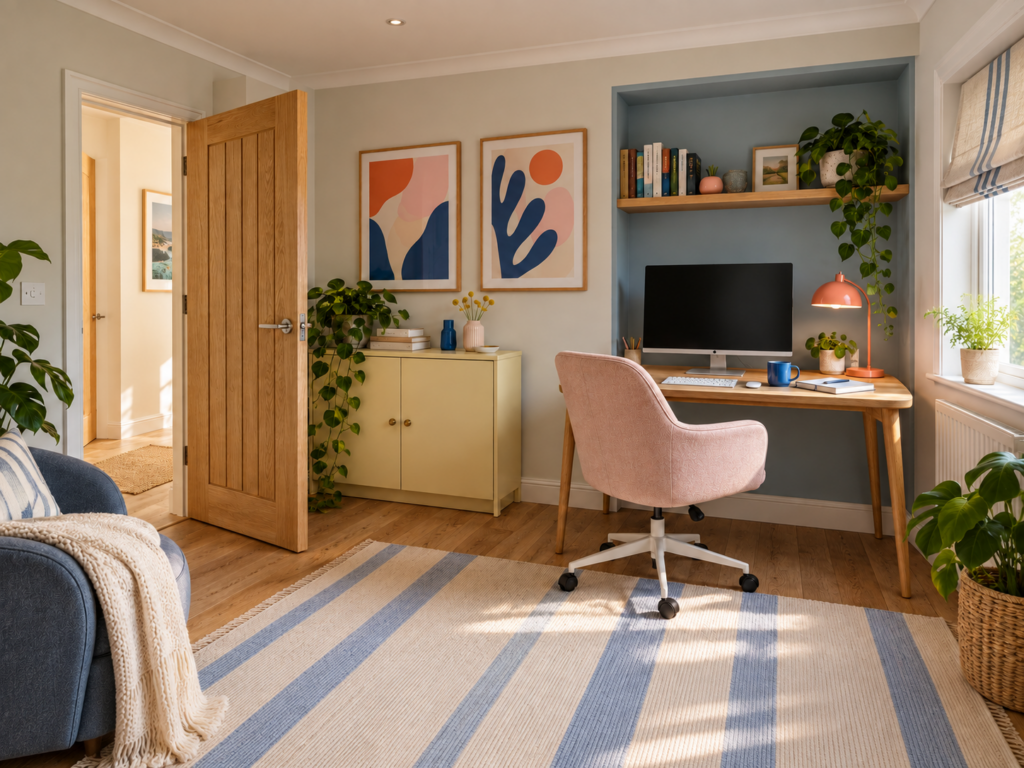
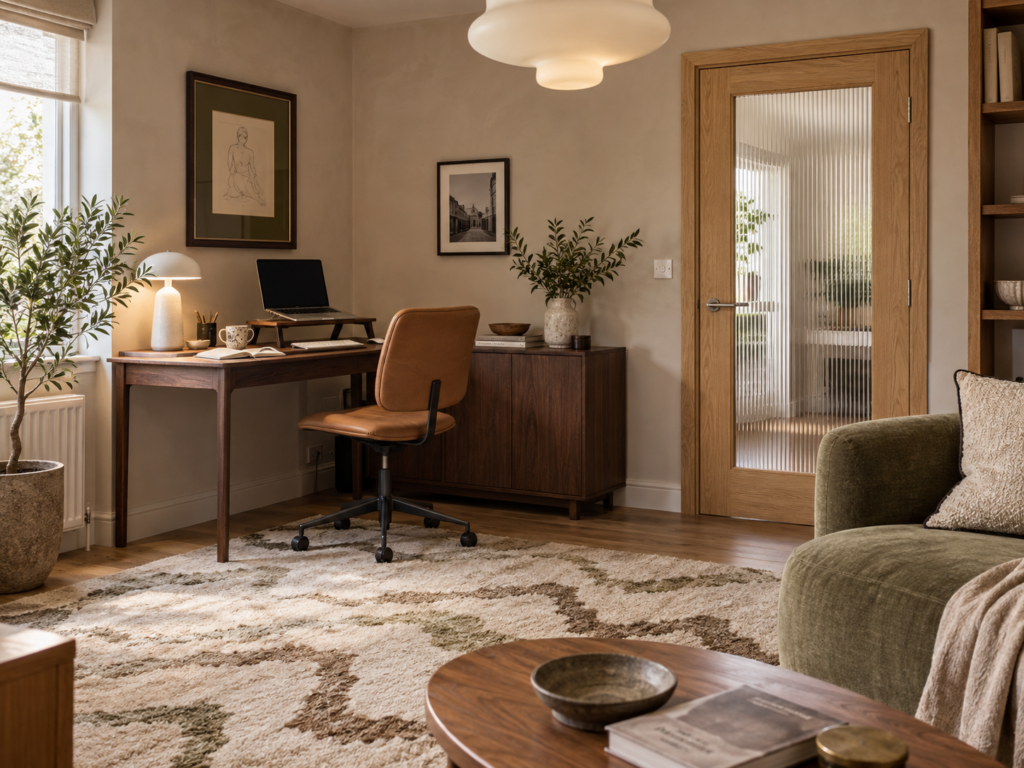
A desk with a timber finish, painted drawers or gently curved edges can sit naturally alongside your existing furniture. You might already own a table that works, provided its height, depth and legroom suit your setup.
The chair deserves particular attention if you work at your desk most days. Look for adjustment and support that suits you, then choose an upholstery colour you enjoy. Try it at the desk height where you’ll actually use it. A lovely dining chair can become considerably less lovely during a long afternoon.
Keep your screen directly in front of you, too. No one wants a neck ache when they’re trying to enjoy their dinner at the end of a long work day. For prolonged laptop use, a separate keyboard and mouse will allow you to raise the screen independently. It’s worth checking out the HSE’s workstation setup guidance as a useful reference when arranging your chair, screen and equipment.
How can I make my home office feel cosy?
It’s all about combining comfortable, practical furniture with a few softer finishes. Think curtains, a shaded lamp and artwork you enjoy. Add a rug if it works with your chair and flooring. Keep the work surface usable, then bring character to the area around it. Cosy shouldn’t mean balancing your keyboard between three candles and a vase.
Bring in Colour That Feels Like You
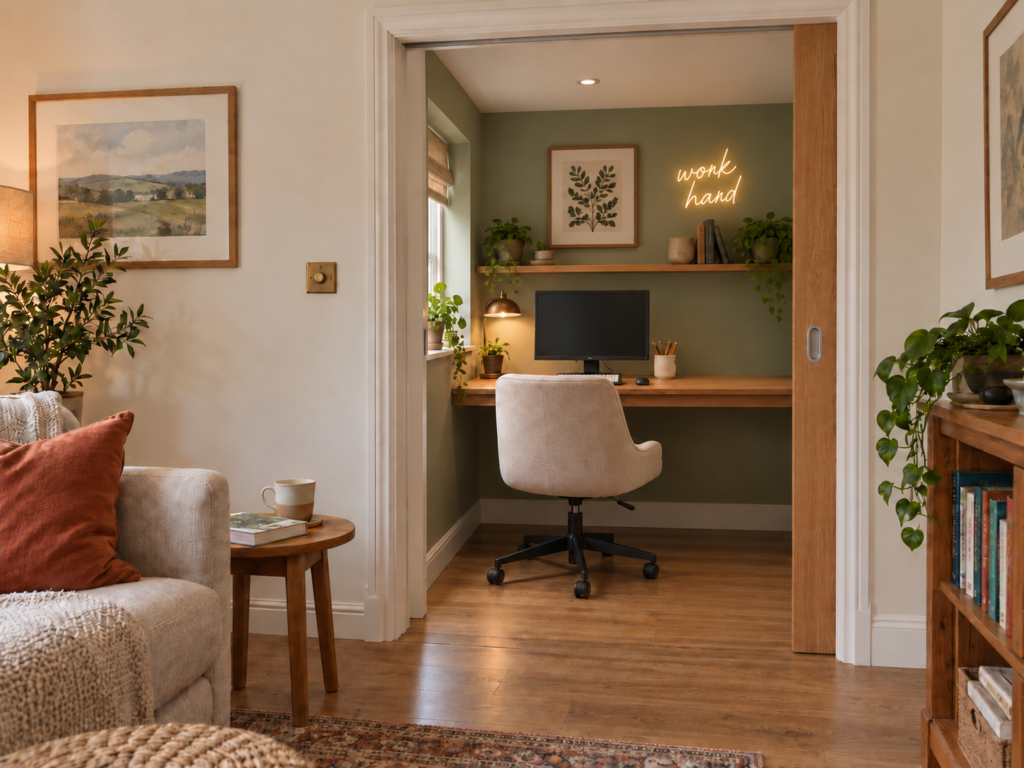
Your home office can borrow its palette from the rooms around it. An olive wall might pick up the colour of your living-room cushions, a dusty pink could work with warm timber furniture. Repeating a familiar shade helps the workspace feel like part of your home.
For a desk in a shared room, painting an alcove or the wall behind it can zone a room and give the area a sense of purpose. Carry that colour into a lampshade or picture mount so it connects with the rest of the space.
What is the best colour for a home office?
It all depends on you! Choose a colour you enjoy spending time around and test it in the room’s actual light. Soft greens, warm neutrals and muted blues are useful starting points. Richer colours can work if you like an enveloping feel. Be sure to check samples in daylight and under your evening lighting before committing to the whole room.
Let Wood Add Some Warmth
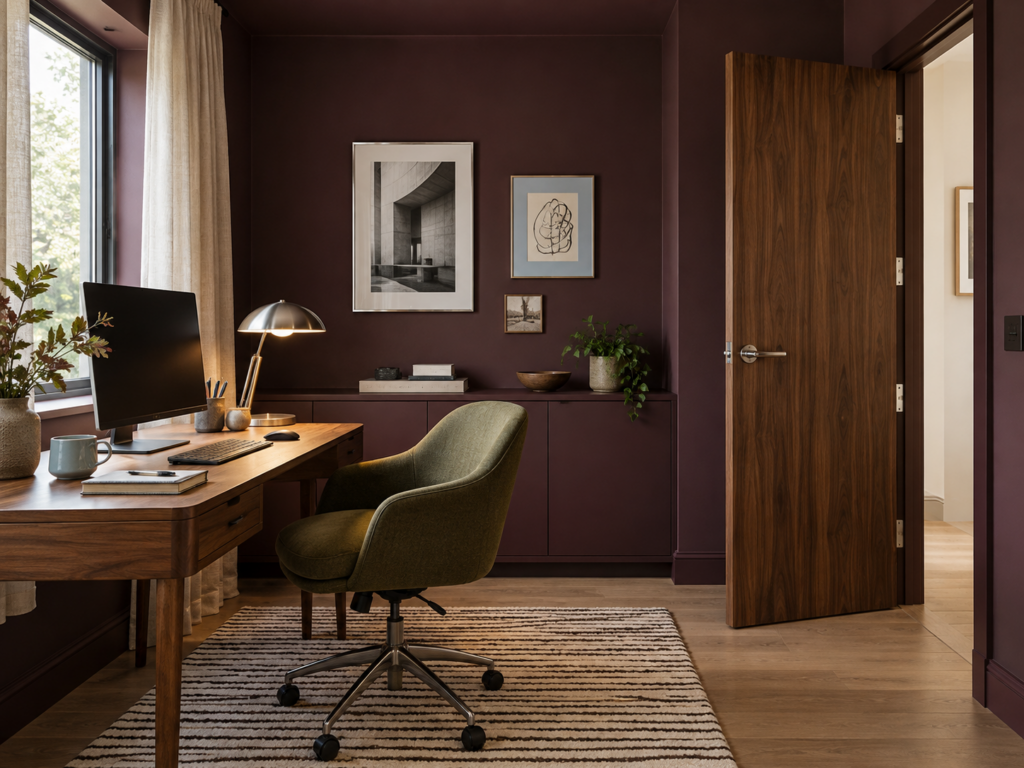
Big office spaces can sometimes feel cold and clinical, but that doesn’t have to be the case at home. Natural wood grain is an easy way to bring some texture and warmth into a room dominated by screens. You can introduce it through a desk, shelving or the door itself.
Oak internal doors are worth exploring when you want a finish that works with both colourful and neutral interiors. Try oak alongside creamy walls and a patterned blind or pair it with a deeper green for a cosy study feel.
You don’t need every wooden surface to match exactly. Repeat a similar tone in one or two smaller details, such as picture frames, to help the room feel connected. If the floor already has a strong grain, keep other finishes fairly simple.
Think about the view from the landing or living room as well. A home office door is part of two spaces, so choosing a finish that works on both sides helps the whole scheme come together. Or, choose a door style that could easily work with a different colour on either side.
Get the Lighting Right Before You Buy Yet Another Lamp
Daylight is useful, but your screen needs to be comfortable to read throughout the day. Try positioning it at right angles to a window and adjust the arrangement if reflections appear. A blind gives you more control when the sun moves round.
Add a task lamp for paperwork and a softer light elsewhere in the room for darker afternoons. Check where each light falls while you’re sitting at the desk. An attractive lamp loses some appeal when you can see its bulb reflected in every spreadsheet.
If the office sits beside a brighter room or hallway, glazed internal doors can allow light to pass between the spaces while the door stays closed. Consider where that neighbouring light actually comes from when choosing the amount of glazing.
Should a home office have a glass door?
A glass door can work well when sharing light and keeping a visual connection matter most. Clear glazing leaves the room visible, so think about the position of your desk and screen if you need absolute privacy.
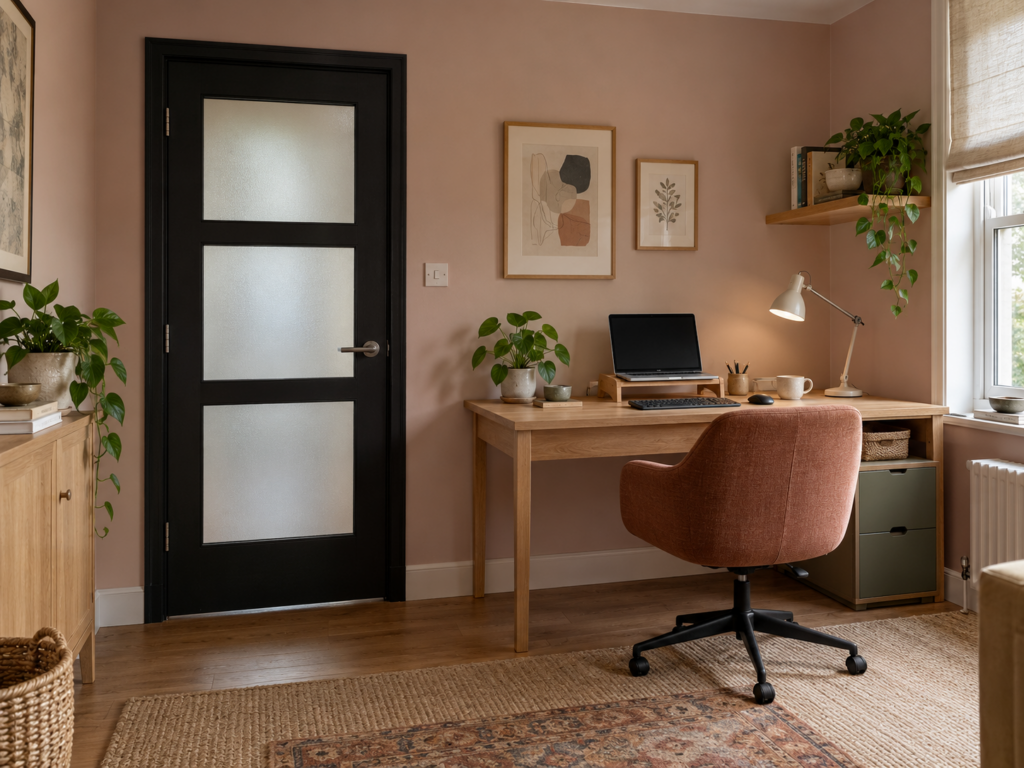
Frosted glass internal doors are perfect for obscuring the view while still allowing light through, although silhouettes may still be visible. An unglazed door gives greater separation but can leave you feeling more “closed off”. It really depends how you’d like your office to connect with the rest of your house.
Make the Door Work With Your Layout
In a compact study space, check how much of the room is taken up by the opening door. It might be limiting where you can put a bookcase or forcing your desk into an awkward corner.
If you’re already in the depths of renovating, pocket doors are an option definitely worth exploring. The leaf slides into a cavity within the wall, freeing the area from a hinged door that would swing across. That can give you way more flexibility around the entrance.
Are pocket doors a good choice for a small home office?
They can be! Particularly where a hinged door clashes with furniture. Installation needs a suitable wall cavity and may involve rebuilding part of the partition though, so there is a lot to take into account. Ask an installer to check the available space, wall construction and any pipes or wiring before ordering and be sure to include that work in the budget from the start.
Whichever opening style you choose, consider what privacy means for your work. Hiding a monitor and keeping a conversation private are different requirements. For confidential calls or significant noise concerns, ask about the complete door set’s tested acoustic performance and fitting needs (solid core doors offer the best sound proofing). Appearance alone won’t tell you how much sound it reduces.
Give Work Clutter Somewhere to Disappear
The printer, charging cables and spare stationery need homes of their own. Otherwise, even a beautifully decorated room can start to feel like the office supply cupboard has moved in.
You don’t need a huge, cold filing cabinet to say “this is an office”. Mix a little open shelving with closed storage… thick upcycled sideboard. Display the books and objects you enjoy looking at, use painted wooden cupboards or drawers for the less decorative essentials. Measure equipment before choosing storage and be sure to follow its ventilation needs if it will run inside a cabinet, too. No one wants a dead computer tower.
Keep cables together with clips or a tray, and put everyday items within easy reach. The best arrangement is one you can easily maintain during a busy week.
How do I hide a home office in my living room?
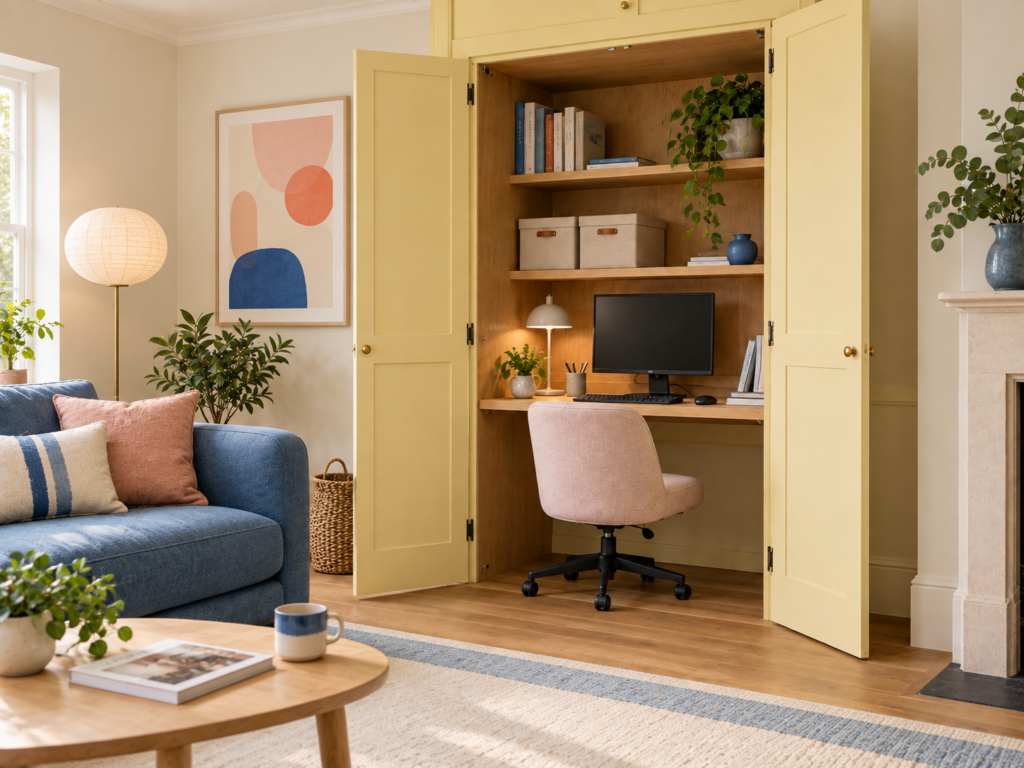
Choose furniture that relates to the room’s existing colours and finishes, then use closed storage for any work equipment that doesn’t quite fit the look. A desk with drawers or a suitable bureau can help. For a simpler solution, keep portable equipment in a dedicated box or cupboard after work.
Alternatively, you could get creative with a “built-in” office. If you have an alcove in your living room that’s not really being used to its fullest potential, consider building a desk and storage into it. To level things up, you could also add some doors to really say goodbye to those meetings that could have been emails at the end of the day.
Build The Room a Little at a Time
It’s all about starting with whatever is making work difficult. Improve the chair if you’re uncomfortable, tackle screen reflections if you’re squinting, or sort the layout if getting to your desk requires a grade 8 level furniture gymnastics.
Once the setup works, you can add colour and personality gradually. A favourite print, a second-hand lamp or curtains that echo another room may be enough to change the feel. Your video-call background doesn’t need its own procurement department.
If a new door is part of the plan, prefinished internal doors arrive with their factory finish applied while primed internal doors come ready to personalise, which can help make the decorating work a lot easier. Be sure to include fitting and hardware in your budget too.
Finish with a small end-of-day routine, too. Put paperwork away, close the laptop and switch off the task lamp. If you have a separate room, close the door. Give yourself a visible sign that the working day has finished.
A Workspace That Belongs in Your Home
The best home office is shaped around how you work and what you enjoy living with. That might mean a colourful corner in the spare room or a quiet, calm study with natural wood finishes and a door you can close.
Explore Vivid’s internal doors to find an option that suits your light, privacy and layout needs. Then add the personal touches that make the space feel yours. That lanyard can stay in a drawer.