
 Amy Hunt
Smaller homes have a habit of giving every room several job titles. The dining room handles dinner, deadlines and parcel sorting. The spare bedroom occasionally welcomes a guest… provided the clothes drying rack agrees to move out for a bit, of course.
Making small spaces work harder starts with a better, considered layout, useful storage and furniture that suits everyday life while still working with the space and your decor choices. You can still have colour, character and a sofa you actually want to sit on.
The right doors can help too, whether that means freeing up an awkward corner or letting light travel between rooms.
Here, we’ll take a look at some small space ideas that will help you make room for the things you enjoy, with fewer sideways shuffles along the way.
Start With What the Room Actually Needs to Do
Before buying another storage basket, think about the jobs your room performs most often.
If the spare room is your workspace five days a week and a guest bedroom twice a year when your bestie stays over, give the everyday setup proper attention. Guests can still be comfortable without a permanently open bed occupying most of the floor. Think pull down bed or even a sofa bed as an alternative.
Then look at the little annoyances in the room you want to alter. Does a dining chair block the route to the kitchen? Can you open the wardrobe properly? Is the hallway console table mostly there to collect dust and things you meant to put away?
Measure the room, including door openings, radiators and awkward corners. Mark proposed furniture positions with masking tape, then try walking around them. Allow for furniture in use: chairs pulled out, drawers open and a sofa bed unfolded.
The tape might reveal that your dream armchair comes with an unexpected obstacle course.
How do you maximise space in a small room?
Prioritise the activities you use the room for most, keep walking routes clear and choose storage around the things you need to keep. Measure furniture in its open or extended position as well as its everyday footprint. Check the door swing before settling on the layout.
Give Your Doors a Starring Role
We know we’re a little bit biased here, but a door can have a big influence on where the rest of the furniture goes in a room. If it opens across the only sensible place for a cupboard, changing how it operates could actually make a really big difference.
Pocket doors slide into a cavity within the wall, freeing the floor area a hinged door would swing across. They’re definitely worth considering if you’re mid-renovation, particularly around compact studies, utility rooms and awkward entrances.
They need suitable space within the wall, so be sure to ask an installer to check the construction, available width and any pipes or wiring first before ordering. Include the wall work and finishing in your budget alongside the door and hardware too, it can be a little more costly to begin with but the difference they make to daily life will definitely be worth it.
If you’re not feeling the extra work and cost needed for a pocket door, a surface-mounted design such as a sliding barn door might be a happy compromise as it moves across the face of the wall instead. It avoids a swinging leaf, but needs a clear stretch of wall beside the opening. Check that a radiator, light switch or bookcase won’t get in its way.
Another great alternative is single bifold doors, they fold into smaller sections and can be useful for compact openings. Remember that the folded panels still occupy space at the side of the opening, so check the clear passage width, though it’s still a lot less than a regular door.
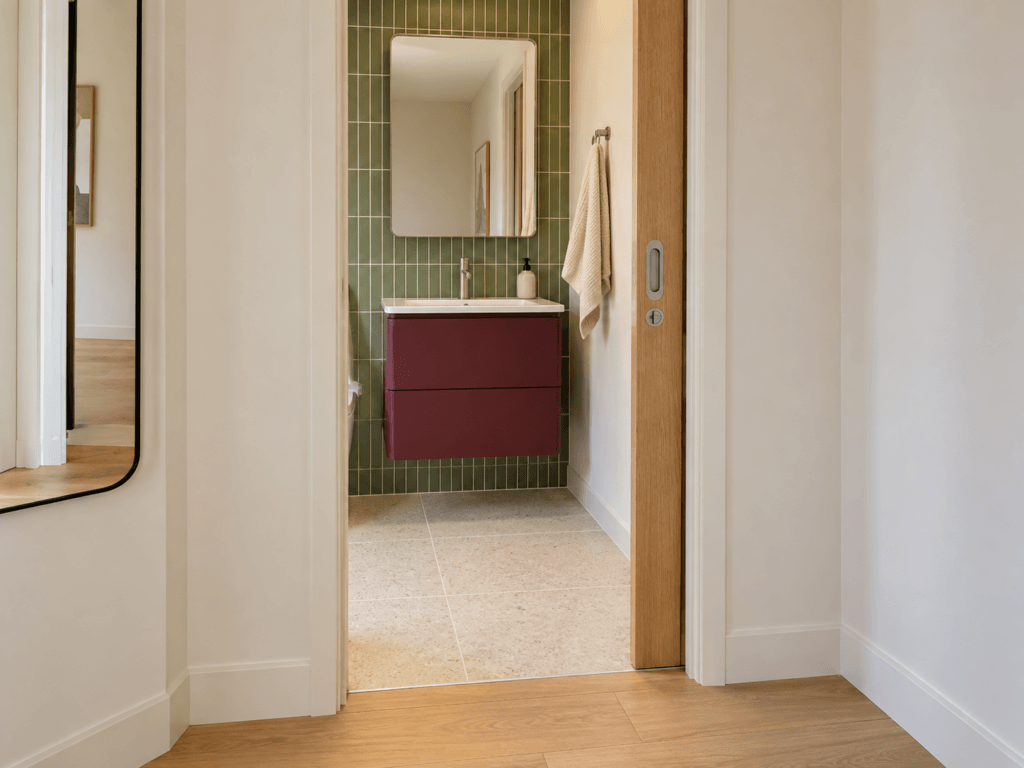
What type of door is best for a small room?
It depends on where you have space to spare. A pocket door needs room within the wall, a surface-mounted sliding door needs space beside the opening, while a bifold needs clearance for its folded panels. A well-positioned hinged door can still work beautifully, though. Ask your fitter to check the dimensions, fittings and any fire-door requirements, because these things will be what determine the type of door you can use.
Make Storage Fit Your Life (and Your Stuff)
Good small space storage starts with what you own. Measure the shoes, bedding, paperwork or kitchen bits you want to put away before choosing the cupboard. A beautifully organised shelf that’s too shallow for the actual things will always be a slightly expensive disappointment.
Use higher shelves for occasional items and keep everyday essentials easy to reach. In an alcove, a taller unit may give you more useful storage than several little pieces spread around the room. That said, tall furniture in small rooms can overwhelm the space very quickly, so try to keep it to a minimum (unless you’re going for that cosy library nook vibe of course).
Mix closed storage with a little open shelving, too. Cupboards can handle cables, board games and ugly bits you don’t want on display, where a shelf can show off books, pottery or that wonderfully odd charity-shop find you’ve been holding onto for the last 10 years.
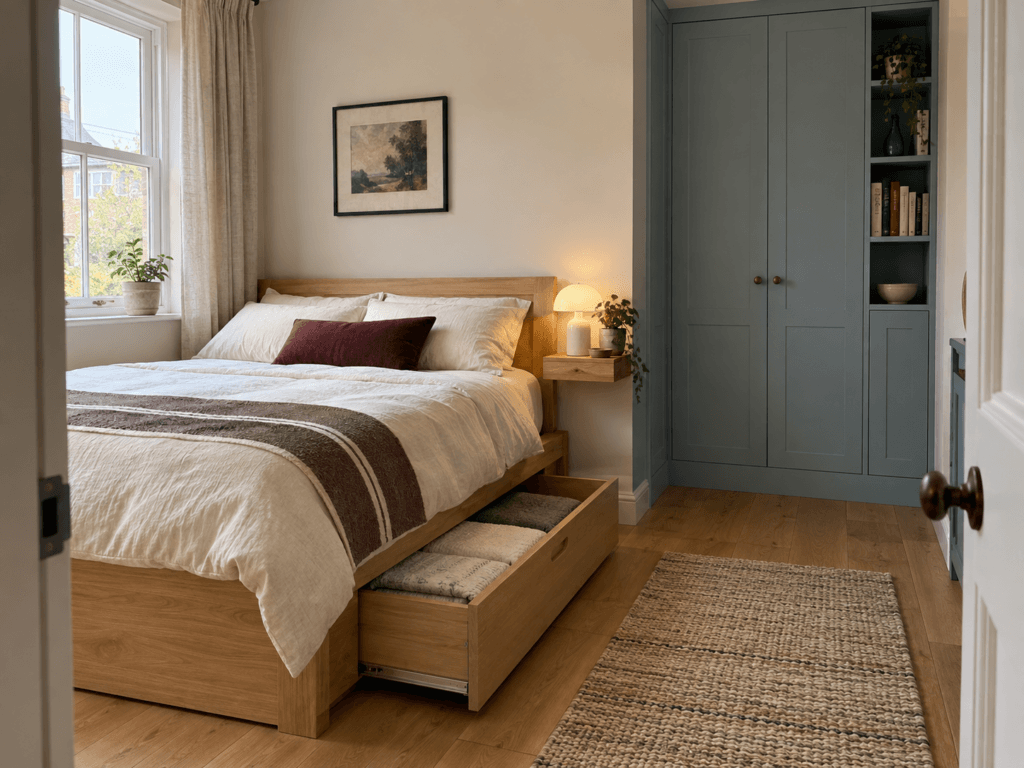
Think about access, too. Under-bed drawers need space to pull out. An ottoman bed needs clearance to lift. The best storage is the kind you’ll happily use on a busy Tuesday without needing to go full Ninja Warrior to operate it.
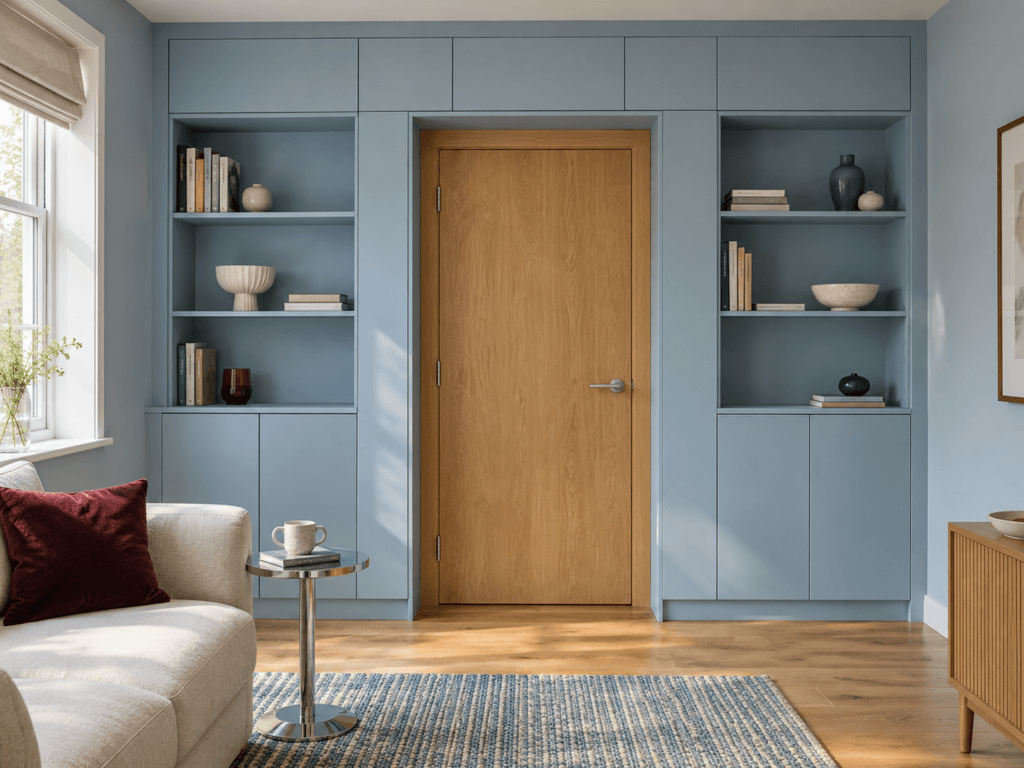
How can I add storage without making a small room feel cluttered?
Choose a few useful pieces with enough capacity and use closed fronts for the less decorative stuff. Repeating the wall colour on fitted storage can really help it sit quietly in the room, too. Don’t overfill any shelving, leave some surfaces clear so the objects you love have room to be noticed.
If you’re planning to clear out and make space by passing on furniture, the British Heart Foundation’s furniture collection service is worth checking out.
Choose Furniture That Earns its Floor Space
Multifunctional furniture works best when both functions are useful to you.
A storage ottoman can hold all your stuff and things, and provide somewhere to put your feet up. A hallway bench can offer a seat for putting shoes on, with useful storage underneath… provided there’s still room to walk past of course. An extendable dining table can accommodate visitors without filling the room every day.
The important bit is how easily each piece changes its job. If opening the sofa bed means moving three tables and a floor lamp into the kitchen, you may find yourself dreading overnight guests for entirely practical reasons.
Check where the extra dining chairs, bedding or table leaves will live. Space-saving furniture becomes much more helpful when its accessories have somewhere to go too.
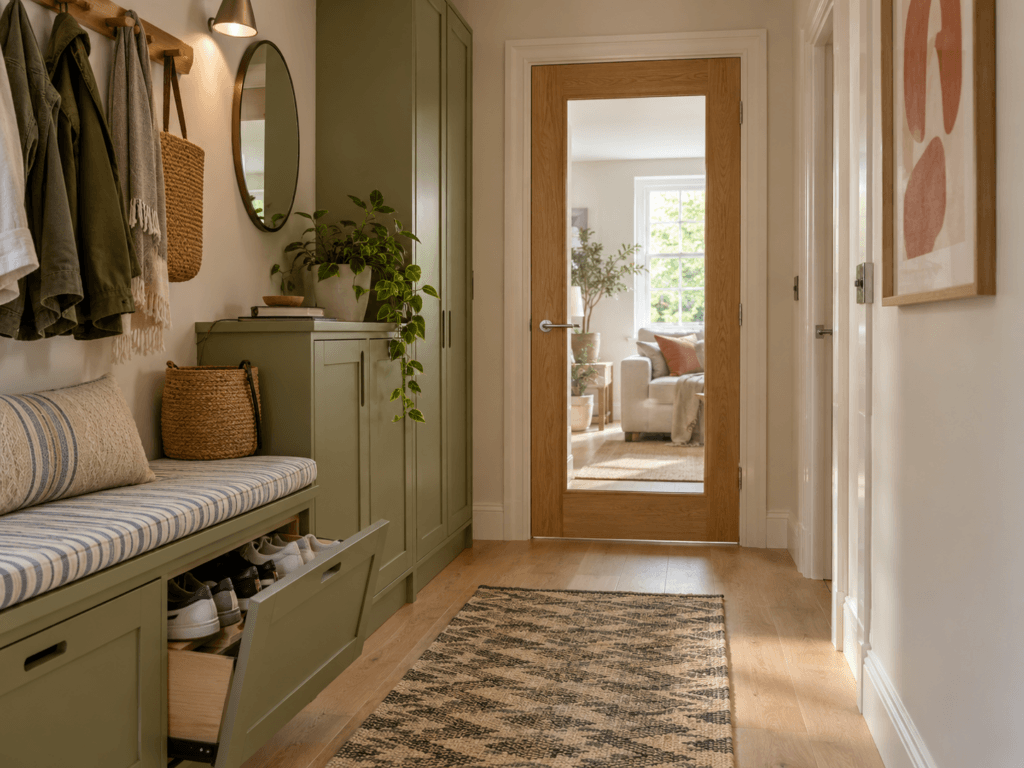
Is smaller furniture always better for a small room?
Not necessarily. One comfortable sofa with relatively slim arms may suit the room better than several small seats and side tables. Compare usable seating, storage capacity and the space around each piece. Aim for the fewest amount of pieces that comfortably do the jobs you need.
Help Light Travel Further
A small room can feel cut off when it sits beside a brighter space but gets little of that light.
Glazed internal doors let light pass between adjoining rooms while keeping a physical division. Consider the route the daylight will take… glazing is most useful when there’s light on the other side to share.
For an area where you’d prefer to soften the view, explore frosted glass internal doors instead.
A mirror can also reflect a window or a pleasant view through the room while simultaneously making the room feel larger. Check what it catches from your usual seat… doubling the view of the laundry pile is unlikely to be the grand transformation you had in mind.
For evenings, a subtle wall light or compact table lamp can nicely brighten a reading corner without a large floor lamp occupying the walkway.
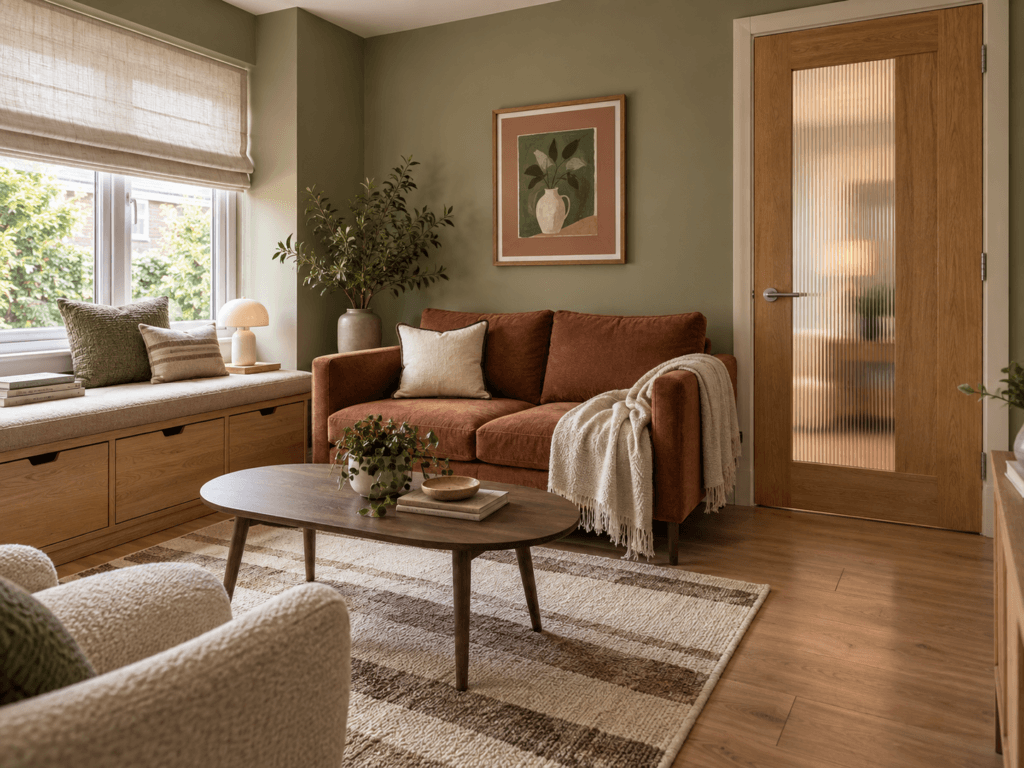
Do glass doors make a small room feel bigger?
They don’t change the room’s dimensions or the door’s opening footprint but they can help it feel more open by sharing light and, with clear glazing, extending the view into the next space. Choose glazing for light and visual connection, then choose what type of opening you’d like based on your layout, both can have a big impact on how big the room will feel.
Give Different Activities Their Own Little Patch
When one room handles several jobs, a few visual cues can define zones and make it easier to use.
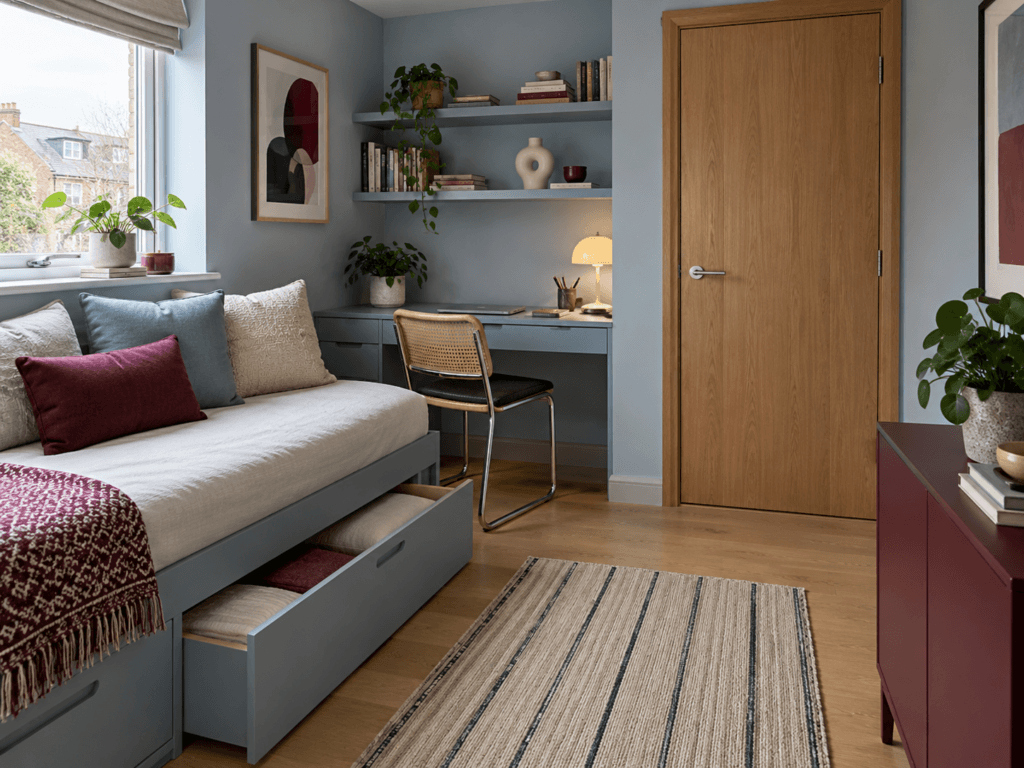
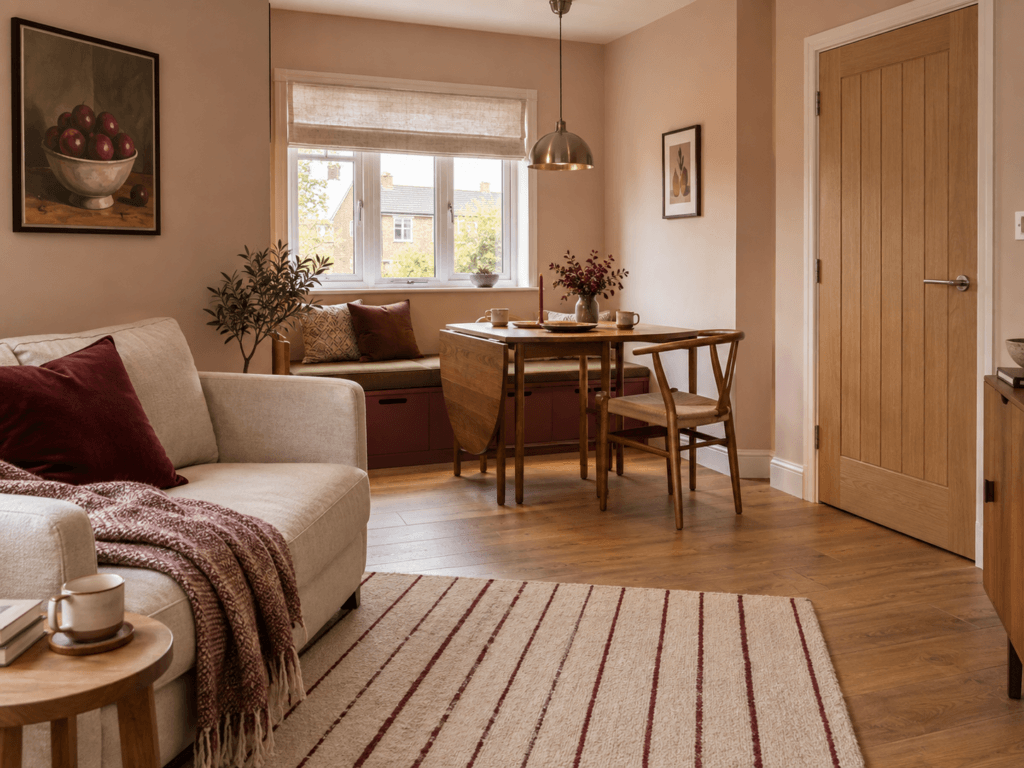
A rug can define the sitting area. A pendant above the dining table can give mealtimes a focal point. Painting a desk alcove a different colour to the rest of the room can help the workspace feel intentional, even when it’s sharing a room with the sofa.
Repeat a couple of colours or materials across the areas to keep everything connected, too. For example, an oak table, an oak door and a timber picture frame can bring continuity without needing to match every wooden surface exactly.
Keep the route between the areas clear. Before adding a freestanding divider, test its footprint. In a compact living room, lighting and furniture placement may provide all the separation you need.
Build in an easy changeover, too. A nearby drawer for work equipment helps the dining table become a dining table again before the food arrives.
Let a Small Room Have Some Personality
Compact rooms can carry plenty of character, not everything has to be white and beige simply because that’s what we’ve been told will make it feel larger. Choose a colour you enjoy, add a print that means something to you and give one or two pieces a chance to stand out.
Natural finishes are useful here. Oak internal doors bring grain and warmth into the room without needing another piece of furniture. Pair oak with soft blue for a gentle look, or try deeper green and a small burgundy accent for something richer.
If several doors are visible from one spot, coordinating their finishes or handles can help the view feel more considered. This can be a really good way to bring some togetherness to a small kitchen too, choosing cabinet/drawer handles and any other ironmongery that coordinates with the door hardware can step up that design-led feel. Don’t worry though, you’ll still have room for the glorious mismatched mug collection to keep things real.
What colours make small spaces feel bigger?
Light colours will always help create a bright, airy feel, while deeper shades can give a compact room an enveloping appeal. The result depends on daylight, artificial lighting and the other finishes in the room. Try samples in the actual room at different times of day. What works in the morning may not feel quite so sexy in the evening.
Dulux Decorator Centre’s guide to paint colours for small rooms offers ideas for different spaces, including options beyond white. Use it to build a shortlist, then let your own room’s light have the final say.
Start With the Change You’ll Notice Every Day
It’s quite easy to get carried away with new ideas when you first move into a house, but you don’t have to overhaul the whole place at once. Clear the route past the dining table, organise the cupboard you open every morning or reconsider the door that’s making the bedroom layout awkward.
Spend first on the thing that will make daily life easier. You can add the finishing touches as you go. Getting from the sofa to the kettle should become considerably less of a sporting event.
For one last shameless plug from us, explore our internal doors for options that suit your space, light and style. With a few thoughtful choices, a small home can feel easier to use and full of personality, you don’t have to compromise.